Pastel de Nata: a traditional Portuguese custard tart
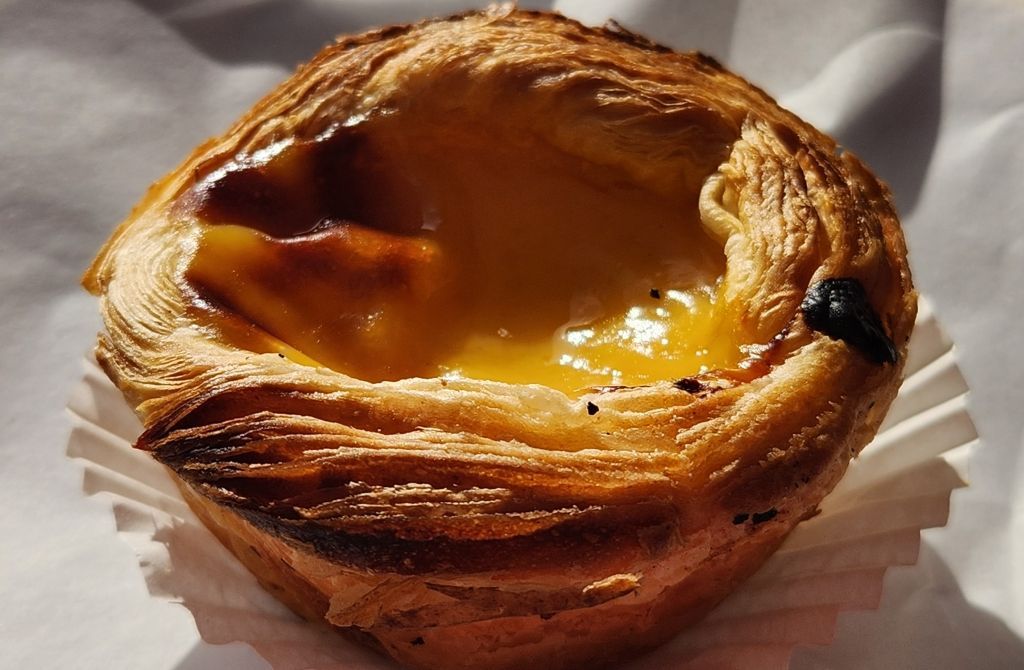
Pastel de Nata

These tasty treats originated in 18th century Lisbon. Today, these flaky, buttery custard tarts can be found all over Portugal, as a delicious staple sweet on breakfast buffets, as a treat to accompany an afternoon coffee, or as a light after dinner dessert. On menus and in bakeries , you will see "Pastel de Nata" (singular) or "Pasteis de Nata" (plural). What follows is the recipe received from a workshop attended in Porto, where we learned to make these yummy tarts.


Enjoy!

INGREDIENTS

Yield: 18-24 dozen tarts
(It is uncertain exactly how many tarts will be made, since the tins were smaller than what would be made using muffin tins.  It was also noted that individual quiche tins can be used, but the amount dough would need to be adapted for the larger "mold". )


Syrup:

     200 grams sugar

     100 ml water

     2 – peels from a lemon

     1 – cinnamon stick


 Cream:

     15 grams flour

     10 grams corn starch

     250 ml whole milk

     6 egg yolks

     (optional additional 100 ml milk during assembly)


Puff Pastry:

     One package of frozen puff pastry made with butter


Finishing: 

     Ground cinnamon

DIRECTIONS

1. Make the Syrup

Pre-heat the oven to 480°F. 

Add syrup ingredients to a cold saucepan. Bring to a boil over high heat WITHOUT stirring. Once it is actively boiling throughout the pot, time it for 2 minutes. Remove from heat and set aside.


2. Prepare the Cream

Mix the flour, corn starch and 250 ml of milk in a second saucepan. Heat over medium heat, stirring constantly, until smooth and thick.

Gradually pour in the syrup in the thin stream, mixing well.

In a small bowl, whisk the egg yolks. While whisking, add a few tablespoons of the hot cream mixture to temper the yolks, then whisk the yolks into the cream mixture, and set aside. (At the workshop, the lemon peels and the cinnamon stick were left in the cream mixture to infuse their flavour.)


3. Mold the puff pastry

Roll the puff pastry into a log, and cut into equal pieces, about 20 grams each. (Will look like pinwheels of dough.) Place pinwheels of dough, lying flat, into each tart mold or cup of muffin tin, and press with moistened thumbs up the sides into a cup shape, to the top of the sides of the mold. 


4. Fill the molds

Pour the cream mixture through a sieve into a large measuring couple to remove lumps, lemon peels and cinnamon stick. (If a creamy tart texture is desired, whisk in up to 100 ml of milk. Without this extra milk, the custard will be more firm.) Pour or spoon the custard into the tarts to be about 2/3 full.


5. Bake

Place tray of tarts in the hot oven and bake for 8-10 minutes, until golden on top.

May be served warm or cold. They are really nice with a light sprinkle of ground cinnamon on top!

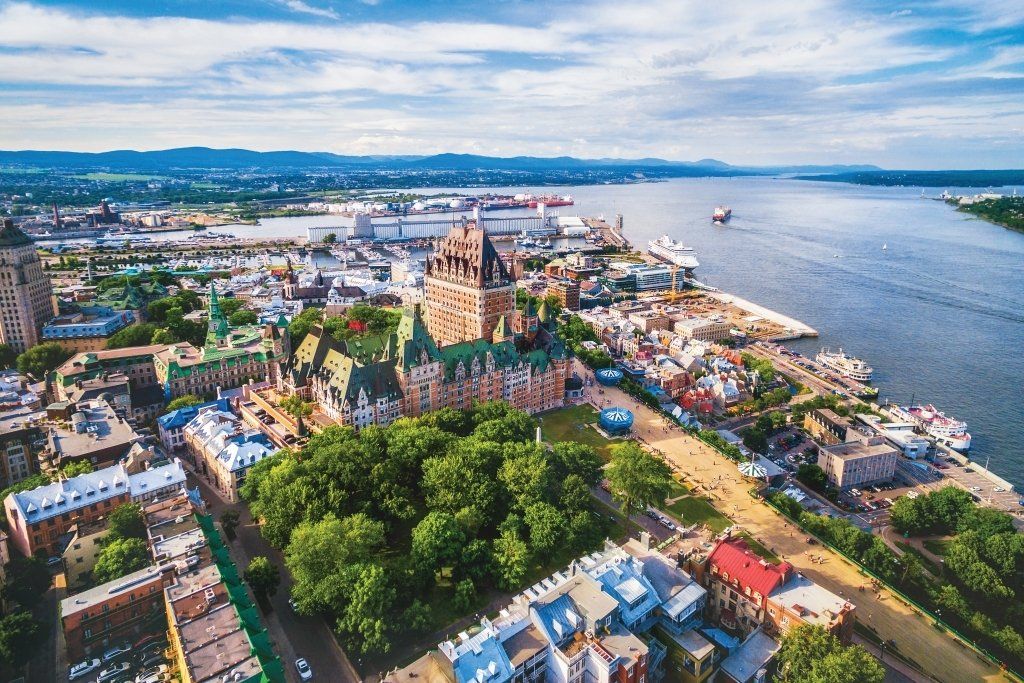
Aerial view of a riverside city with a large historic building, dense trees, and boats on the water
By kerry April 23, 2026
Québec’s Regions: Five Destinations Worth Exploring | DeNure Tours
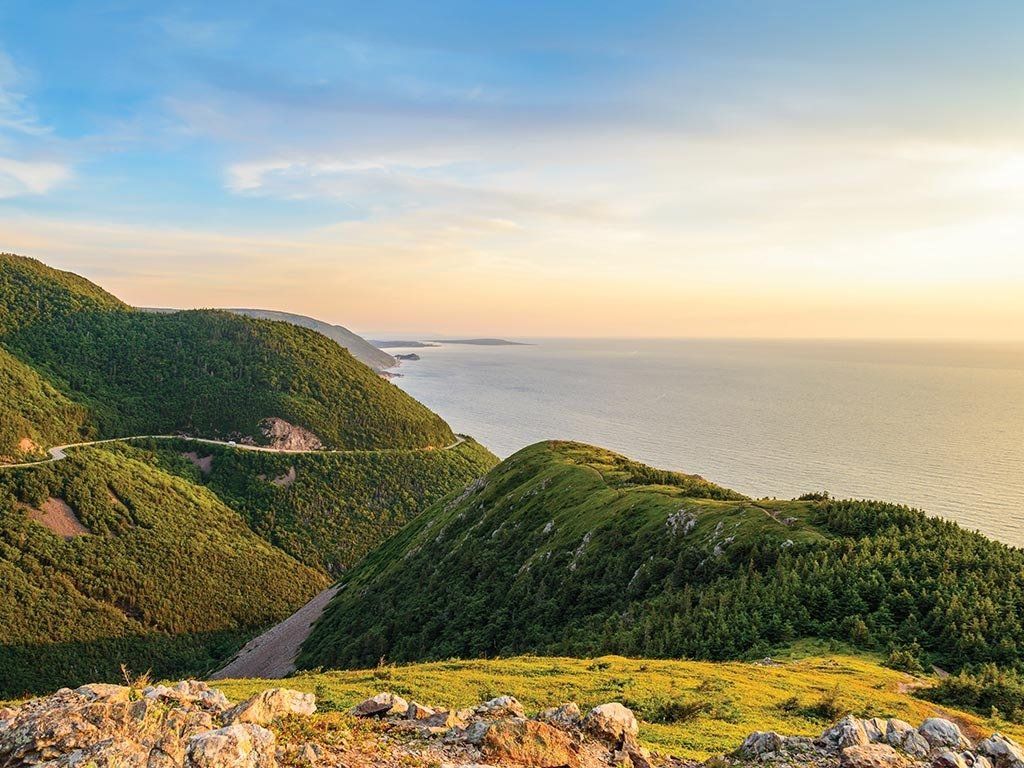
Green hills meet the ocean under a blue and gold sky; road curves along the coast.
By Website Editor May 9, 2023
Red and black train,
By Website Editor February 14, 2023
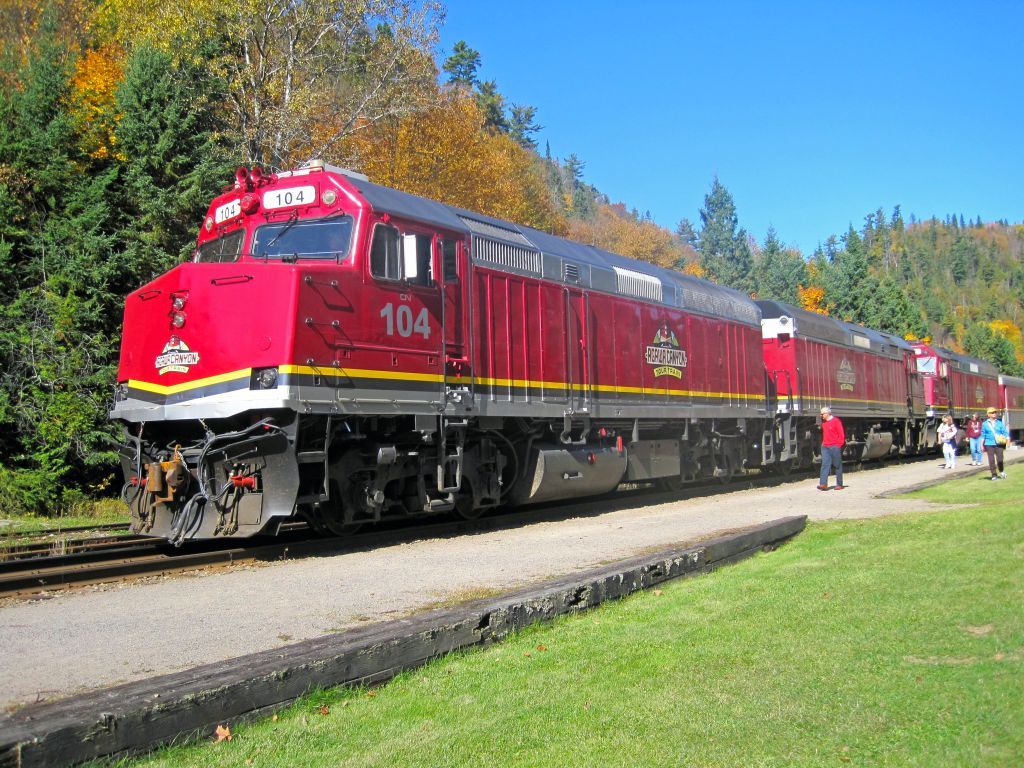
‘All Aboard!’ for Fall Foliage 
Person planning a trip, using a map and laptop on a wooden desk, with a camera and other travel items.
By Jessica September 27, 2022
The next time you're vacation shopping, be sure to follow these useful tips.
Autumn foliage reflected in calm water, train visible on the shoreline.
By jessicabullock August 5, 2022
Here are the top 5 reasons why you should book your Agawa Canyon Adventure with us!
Yellow house overlooking the ocean and massive rock formation, blue sky, and green vegetation.
By Website Editor August 4, 2021
In 2009, National Geographic Traveler ranked the Gaspé Peninsula third on its list of the world’s must-see places. Why? Visitors to this region are soon awestruck by Percé Rock and the natural inhabitants of nearby Bonaventure Island.
Three colorful row houses on a hill under a blue sky.
By Website Editor May 26, 2021
No trip to Newfoundland is complete without visiting its capital St. John’s. This inviting city is the perfect combination of big-city luxury and small-town charm. And as the oldest and most easterly city in North America, it is also where history lives. Visitors will delight in wandering the narrow, criss-crossing streets carved by horse and carriage over 100 years ago. Many pictures have been snapped of the colourful jellybean row houses wedged together in hidden alleyways and along the city’s steep hills. You’ll be amazed by the famous Battery, where tiny wooden homes still cling valiantly to cliffs ravaged by ocean waves. And hovering over the Battery is Signal Hill and the unmistakable Cabot Tower that guards the summit. It was here in 1901 that Marconi famously received his first wireless transmission across the Atlantic. But in addition to the museums, shops and attractions that you would expect to find in a capital city, St. John’s is located on the water. In fact, the province features over 29,000 kilometres of pristine coastline, enough to stretch back and forth across Canada four times. And there's no better way to enjoy it than by boat. Sail along the shore enjoying its rugged beauty, and encounter natural wonders like whales, icebergs, and seabirds. In fact, many visitors have caught a glimpse of a humpback playfully frolicking or breaching high into the air. Friendly and curious creatures, whales are known to surface just a few metres from tour boats. During spring and early summer, you might also cross paths with a 10,000-year-old iceberg drifting down Iceberg Alley on a southerly migration from Greenland. And keep an eye out for the puffins, kittiwakes, and gannets that reside in the many cliffs, crags, inlets, and islands around the coast, and on the ocean itself. For the nature lover, a trip out to the Witless Bay Ecological Reserve is a must. Comprised of four small islands, this reserve is one of nature's greatest wonders anywhere on earth. In summer, it is home to millions of seabirds that come to shore to nest and raise their young on the four islands. Of course, despite all of this, what you’ll remember most about your trip to Newfoundland, is the people. Friendly faces greet you at every turn, people proud of their history, and eager to make you one of their own.